what's actually being proposed
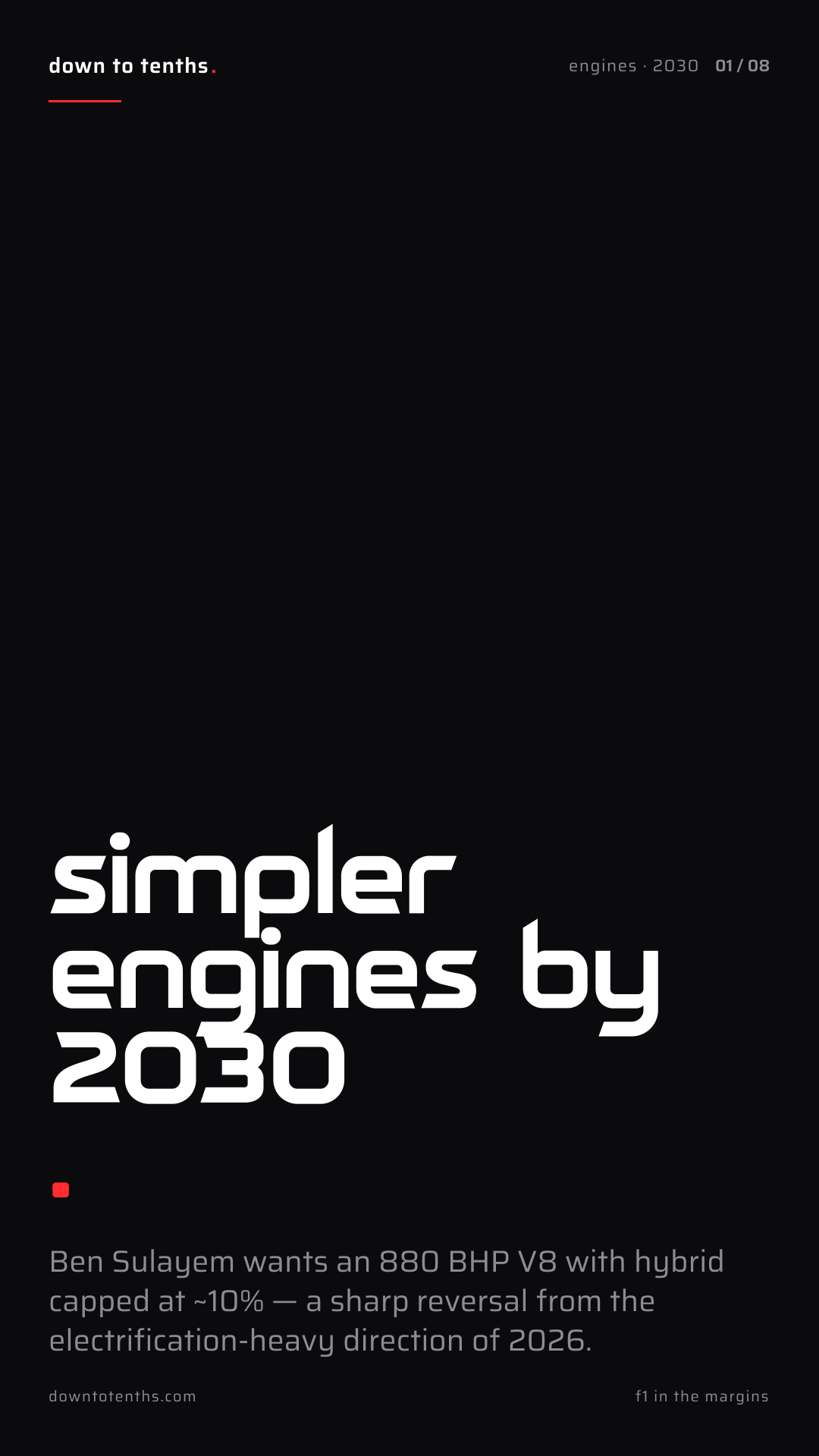
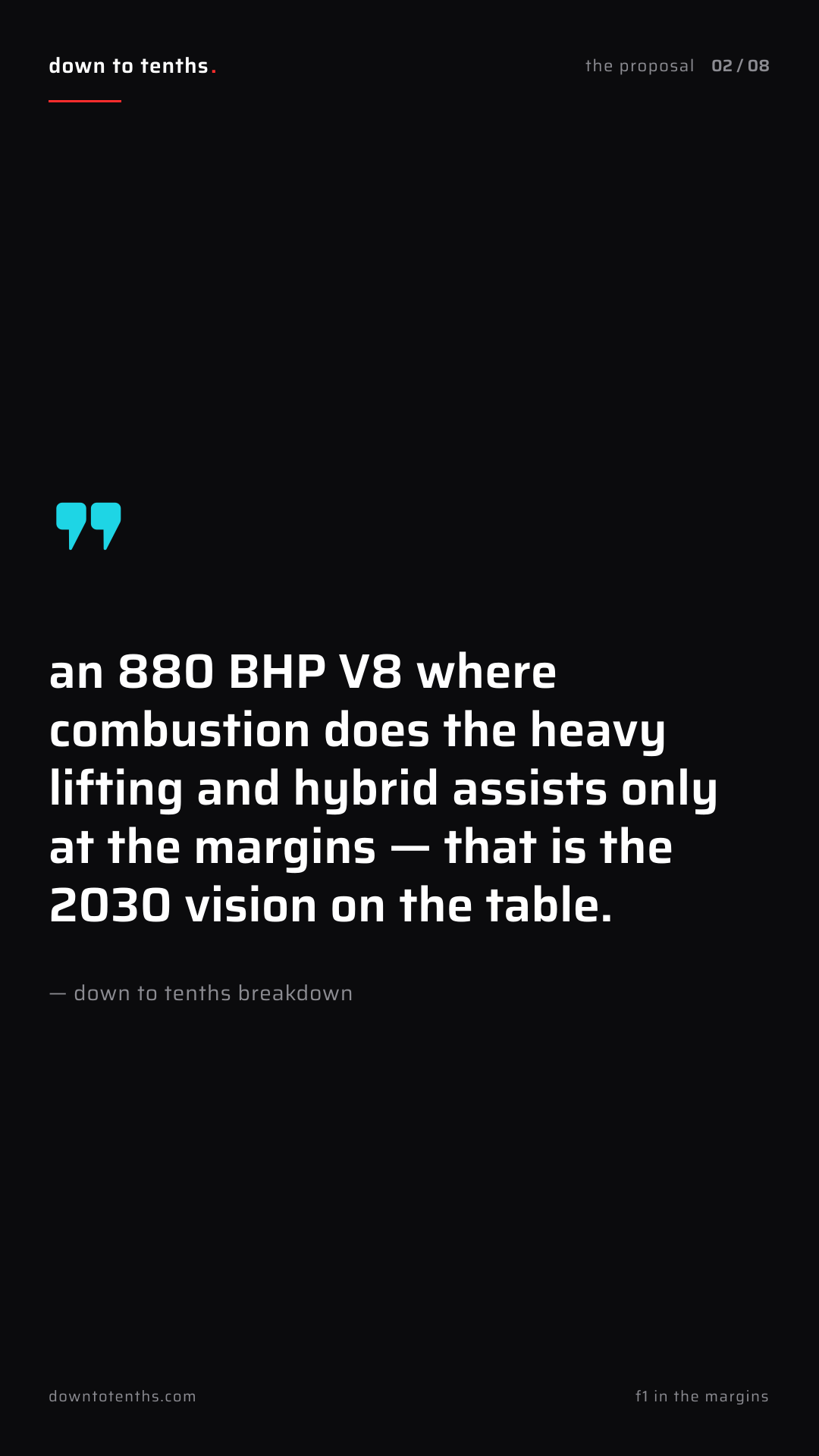
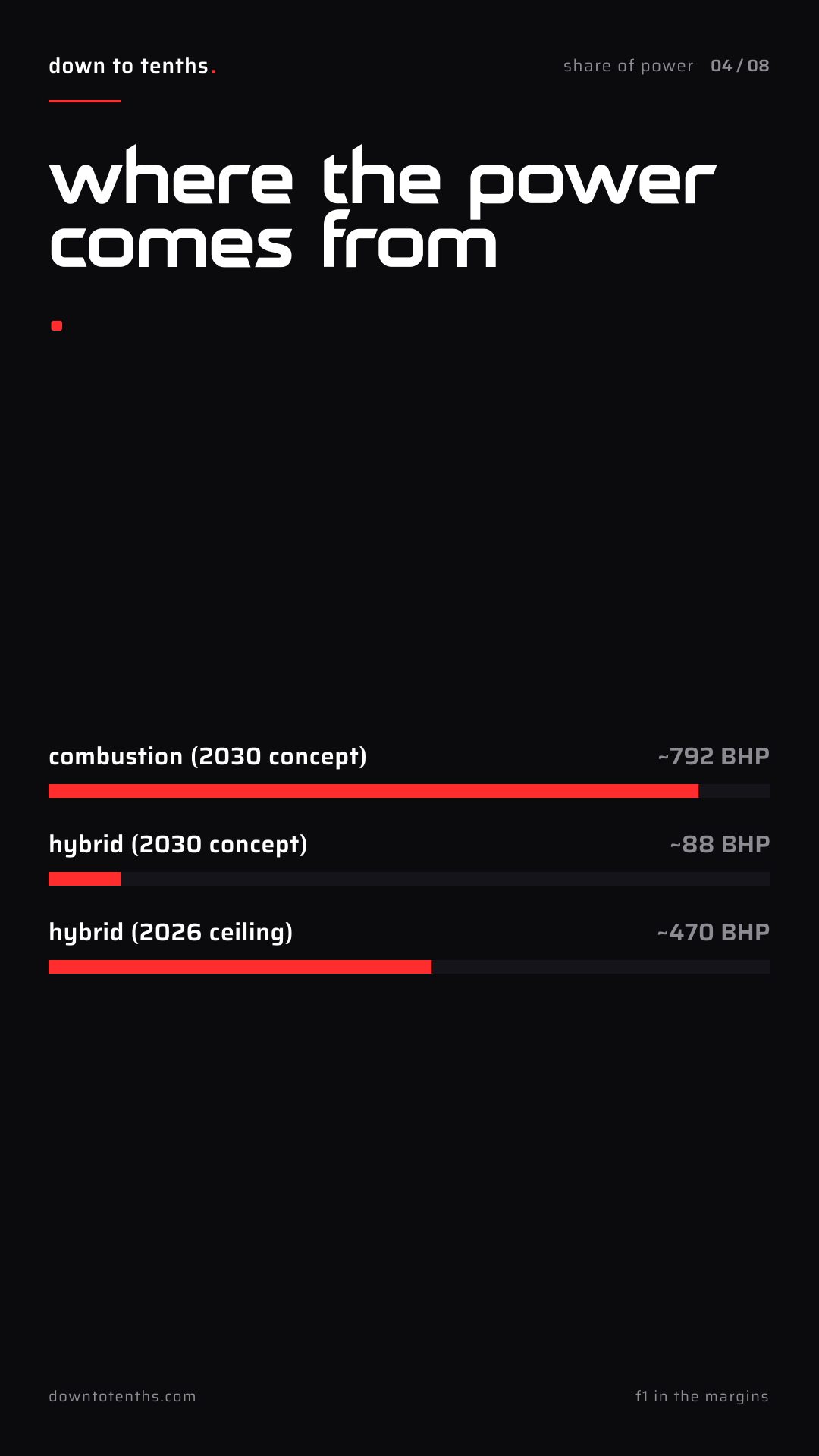
the current 2026 power unit architecture leans hard into electrification — around 350 kW of electrical deployment, split between MGU-K and a retained MGU-H equivalent. Ben Sulayem's 2030 concept would strip that back dramatically, targeting a naturally aspirated or lightly boosted V8 where the combustion unit does the heavy lifting at ~880 BHP and hybrid assists only at the margins.
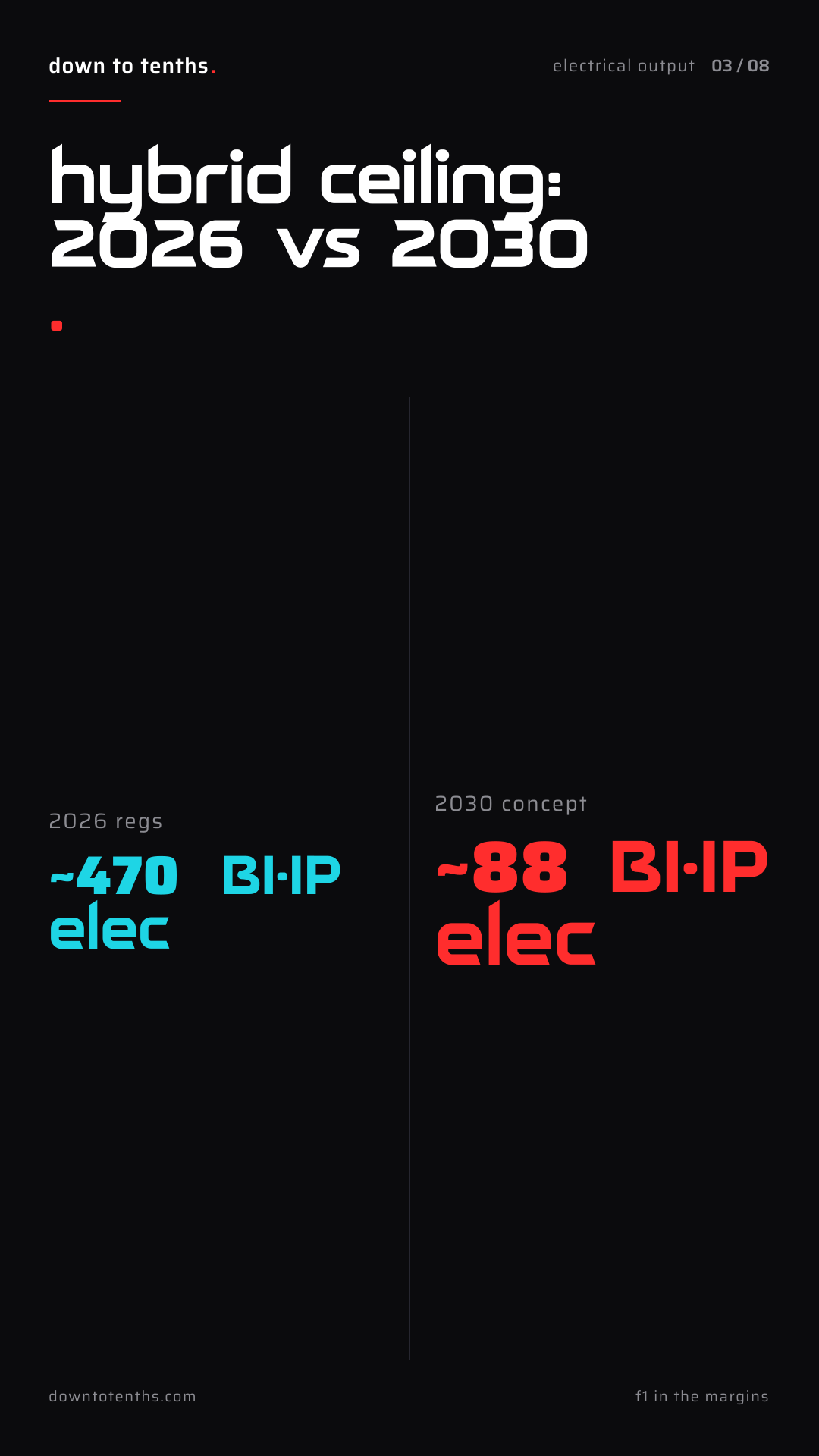
a 10% hybrid share on an 880 BHP total output works out to roughly 88 BHP of electrical contribution — compared to the ~470 BHP electrical ceiling pencilled into 2026 regs. that is not an incremental trim; it is a fundamentally different power delivery philosophy.
why this matters on track
hybrid deployment windows shape lap time in specific, measurable ways — particularly out of slow corners where MGU-K torque fills the combustion unit's turbo lag. a system contributing only 88 BHP electrically gives drivers far less harvest-and-deploy management to optimise, which simplifies energy strategy but also removes a layer of differentiation between teams.
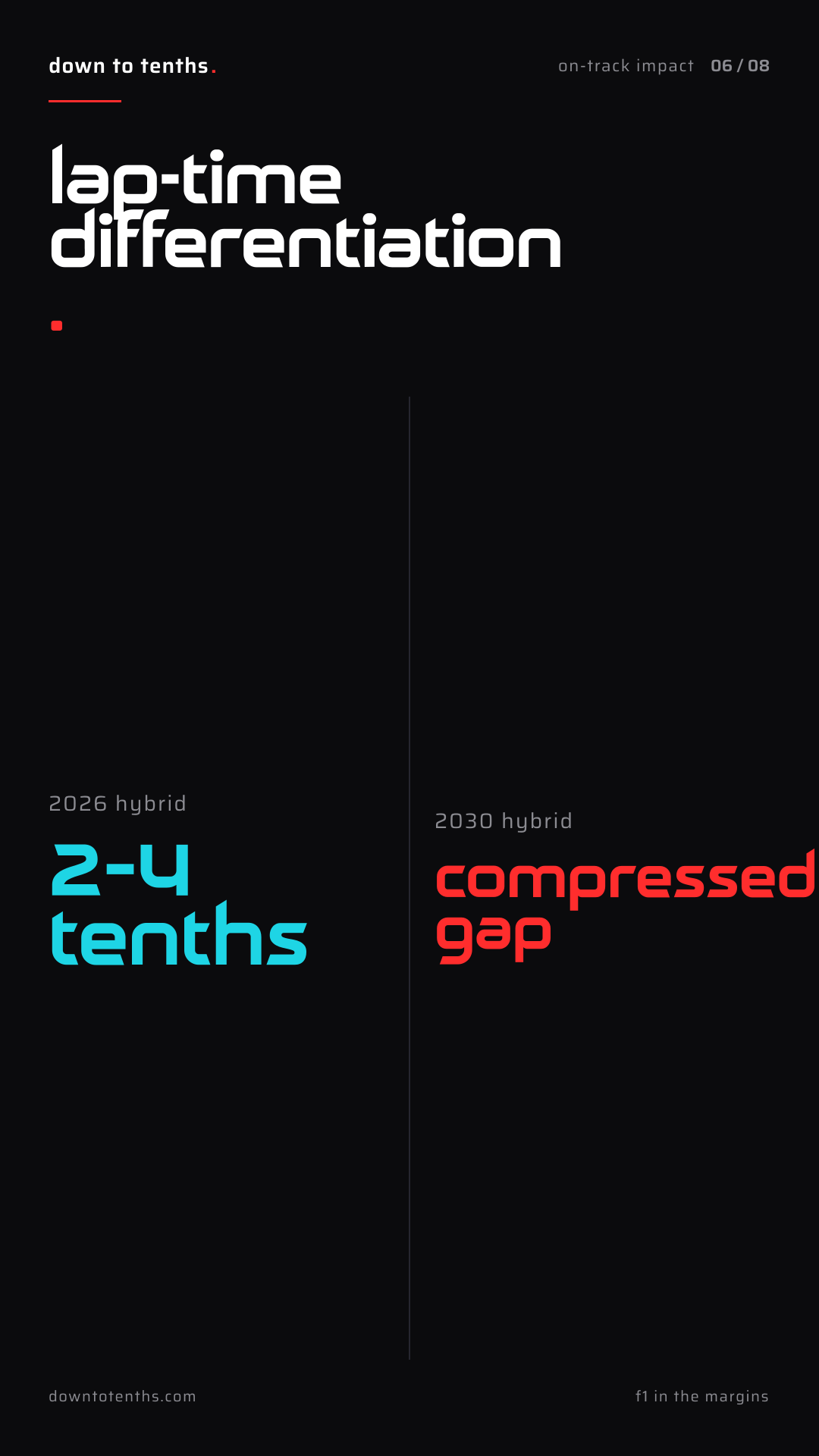
under the current 2026 framework, electrical deployment is expected to account for meaningful lap-time variance between constructors who map their energy curves differently — potentially 2-4 tenths through a technical sector. that gap compresses significantly if the hybrid becomes a footnote rather than a co-lead.
the political context
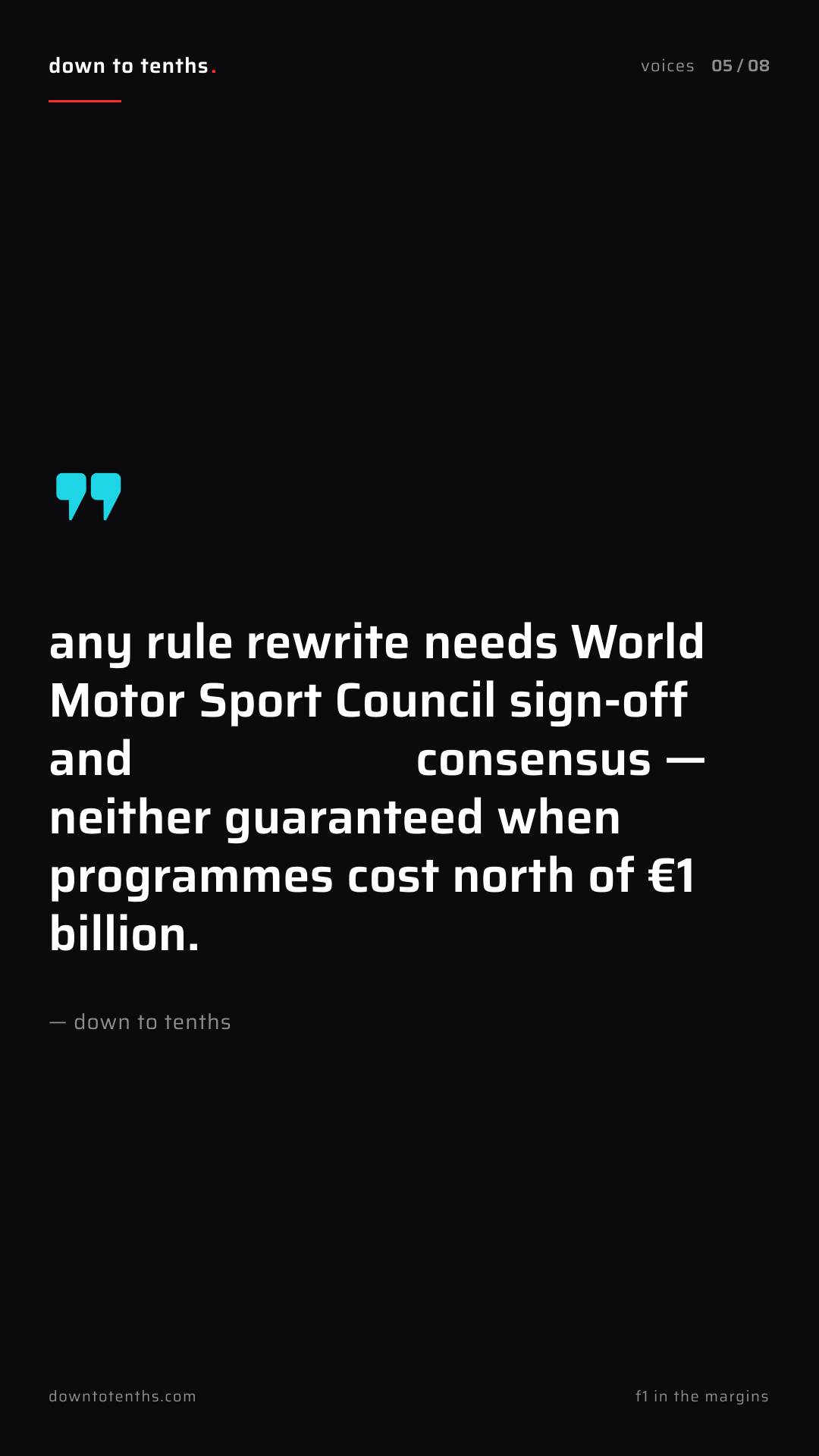
this is Ben Sulayem speaking, not a ratified FIA regulation — the timeline is 2030 at the earliest, and manufacturers already committed to 2026 (Mercedes, Ferrari, Honda, Renault, Audi) will have opinions. any rule rewrite requires World Motor Sport Council sign-off and constructor consensus, neither of which is guaranteed when engine programmes cost north of €1 billion to develop.
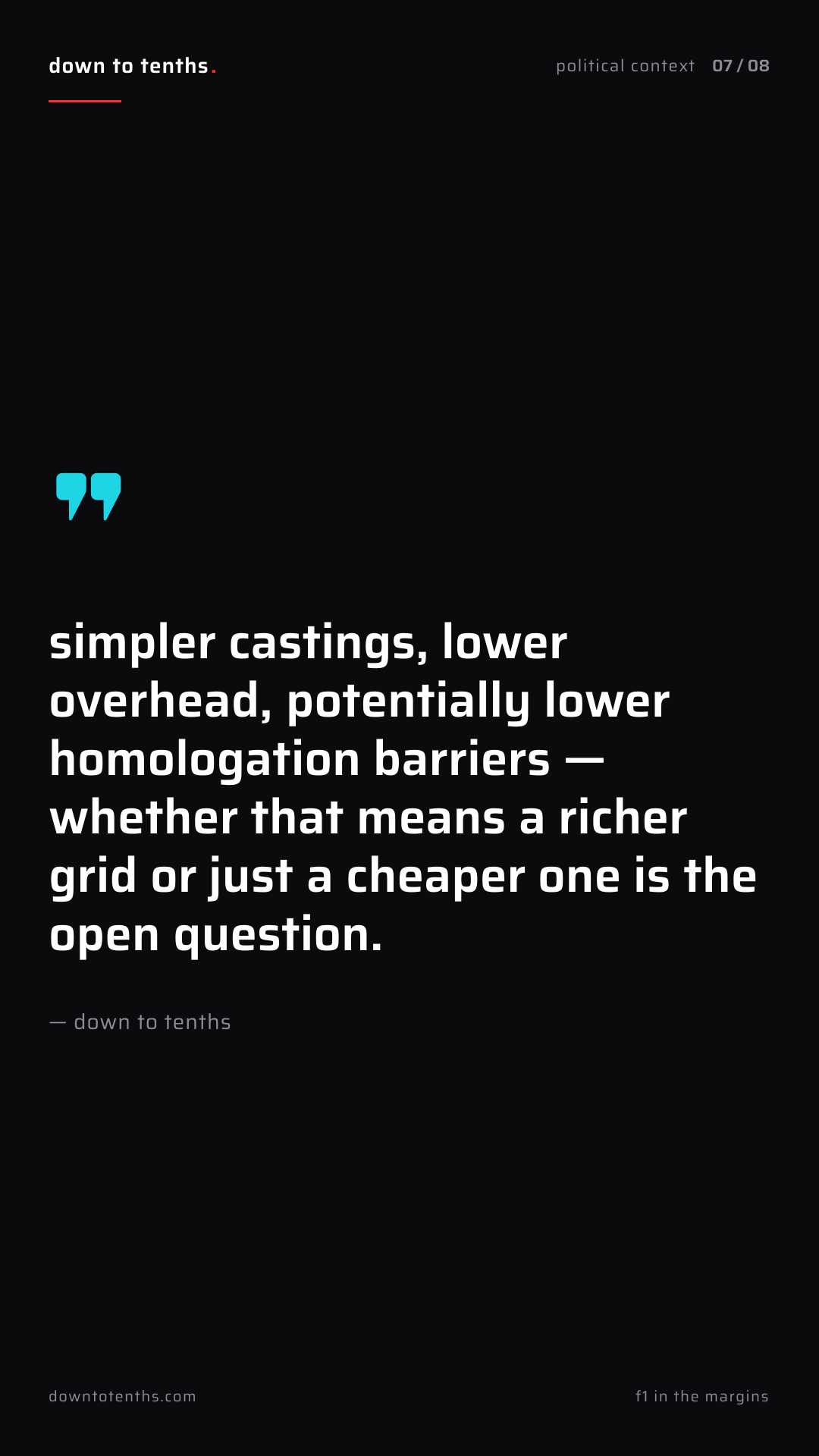
the V8 framing is also partly a cost and accessibility argument — simpler castings, lower development overhead, potentially lower homologation barriers for new entrants. whether that translates to a richer grid or just a cheaper one depends entirely on what the commercial framework looks like alongside it.